FootJoy
FootJoy – Three Signs that Indicate you’re Wearing the Wrong Size of Golf Shoes
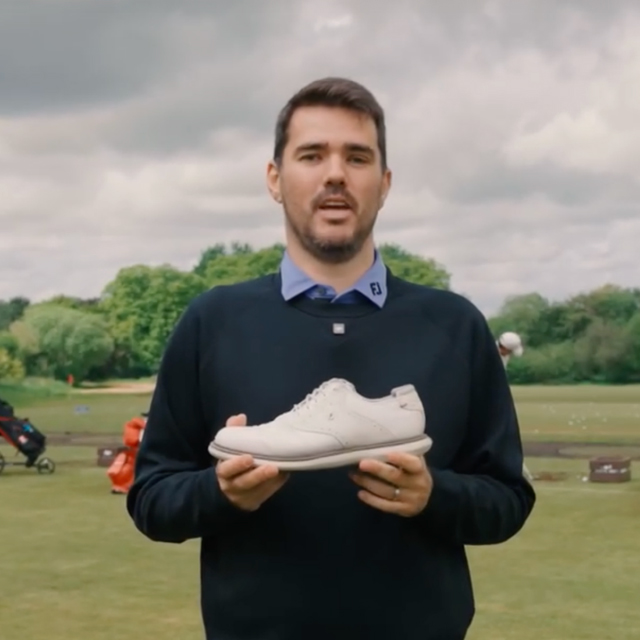
A correctly fitted golf shoe does more than provide comfort: it also supports stability, foot support and performance throughout the swing. FootJoy highlights three signs that could indicate your golf shoes are not the correct size or fit.
2 October 2026 – Choosing the correct golf shoe size is much more important than it may seem. During a round, our feet take thousands of steps and, at the same time, need to provide a stable base from which to execute the swing. A shoe that is too big, too long, or has an unsuitable volume can compromise both the golfer’s comfort and stability.
FootJoy highlights three very specific signs that can help us identify whether our golf shoes are not fitting as they should.
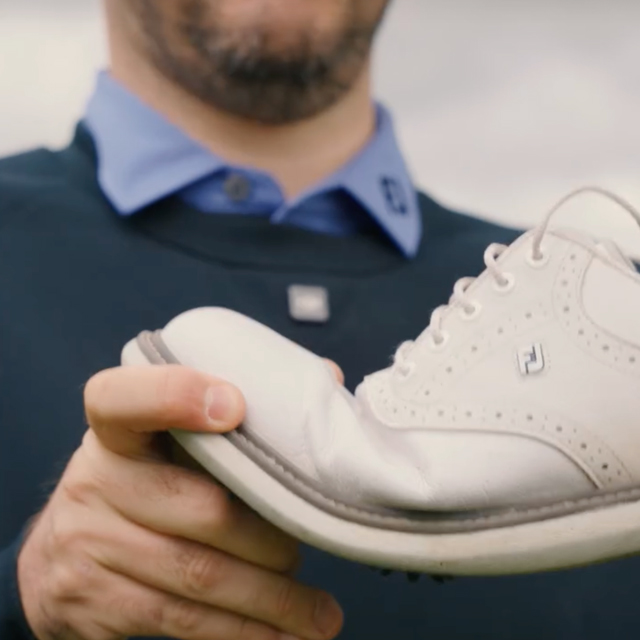
1) Excess material and creasing across the upper
When we walk, the shoe naturally flexes at the points where the foot also bends. Therefore, the appearance of a crease across the upper does not, in itself, mean that the shoe size is incorrect. It is a normal consequence of the shoe flexing.
The sign to look out for is an excessive build-up of material and creasing across the upper. This can indicate that the shoe is too long, too wide, or has more internal volume than our foot requires.
So, the aim is not to look for an upper that remains completely smooth, but to observe whether the amount of material gathering at the main flex point while walking is excessive for the shape and size of the foot.
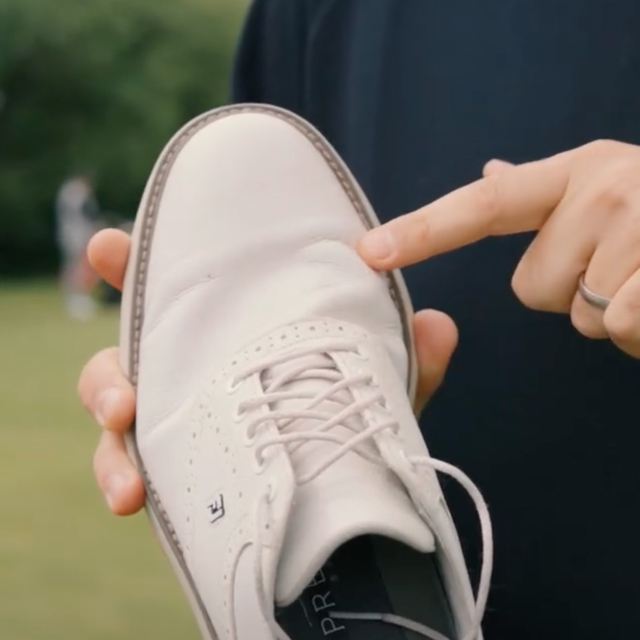
2) More than one crease across the forefoot
A degree of transverse flexing across the forefoot is completely normal and reflects the natural movement of the foot during the walking cycle. The number of creases alone should not be taken as definitive proof of an incorrect shoe size, but the appearance of two or more pronounced flex lines can be a sign that the shoe is too long.
When the shoe is too big, its flex point may not align correctly with that of the foot, causing the upper material to crease at more than one point.
A good fit should allow the foot to flex naturally, without excess length causing surplus upper material to crease at several points across the forefoot. It is a simple detail to check and can provide an initial indication of whether the chosen size is genuinely the right one.
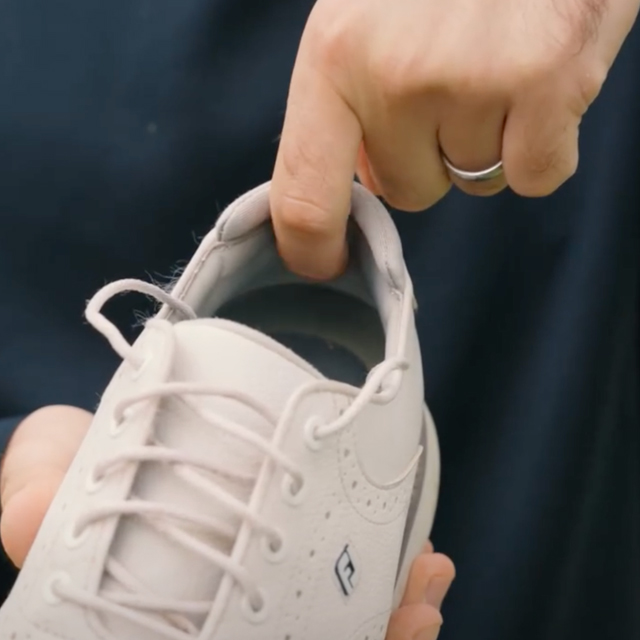
3) Excessive heel wear
Another sign to look out for can be found at the back of the shoe. When footwear is too long, the foot may move excessively inside the shoe as we walk.
This movement can cause the heel to lift slightly away from the heel counter with each step. The result can be an undesirable combination of rubbing, discomfort and irritation to the foot, together with premature wear to the inside of the heel area of the shoe.
In a correctly fitted golf shoe, the heel should be securely held in place, without excessive lift or unnecessary movement. In golf, where foot stability is fundamental, this becomes even more important.
Size is not everything
These three signs highlight the fact that choosing a golf shoe is not simply a matter of getting the right number. The shoe’s length, width and internal volume also determine how well it fits the foot.
For this reason, FootJoy offers a range of width options and half sizes across its footwear collection, helping to provide a more precise fit for different foot shapes and profiles. The brand also has Product Specialists across Europe who conduct dedicated golf shoe fitting sessions.
For the amateur golfer, the conclusion is straightforward: a single crease is normal; excess material, multiple flex lines or a pattern of creasing that suggests the foot is not flexing at the correct point are signs worth paying attention to. They should always be considered alongside other fit indicators, such as heel hold, shoe length and width.
A good golf shoe should feel comfortable from the very first step, hold the foot securely and allow it to flex naturally. Before looking for greater stability during the swing, it is worth making sure that our feet are standing in the correct size of shoe.
MYGOLFWAY RECOMMENDATION:
The next time you try on a pair of golf shoes, do not look for the upper to remain completely smooth. Walk in them, flex your foot and, if possible, adopt your normal golf stance. Observe where and how the shoe creases, check that the heel remains securely held and make sure there is no excessive movement inside the shoe. If you notice several of these signs, it is worth trying a different size, half size or width before making your choice.
With golf footwear, the aim is not to eliminate flexing, but to ensure that the shoe flexes where and how your foot naturally does.
Because in golf, a well-fitted shoe should not require you to adapt to it: it should adapt to your foot.