Tag Archives: Dr. Robert Neal

MYGOLFWAY INTERVIEW – Dr. Robert Neal: “The key lies in the little fundamentals that make the swing effective”

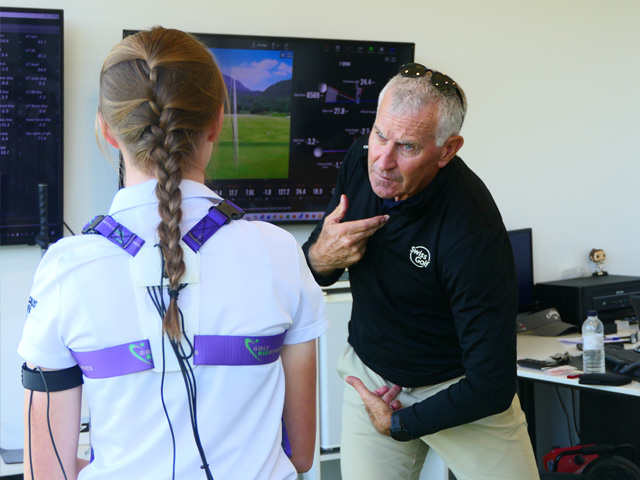
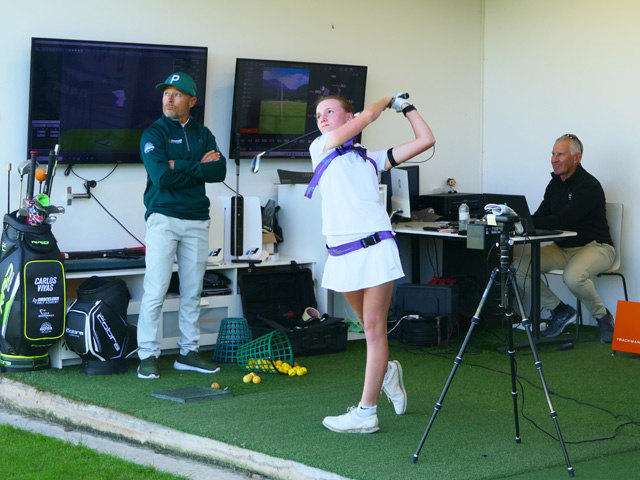
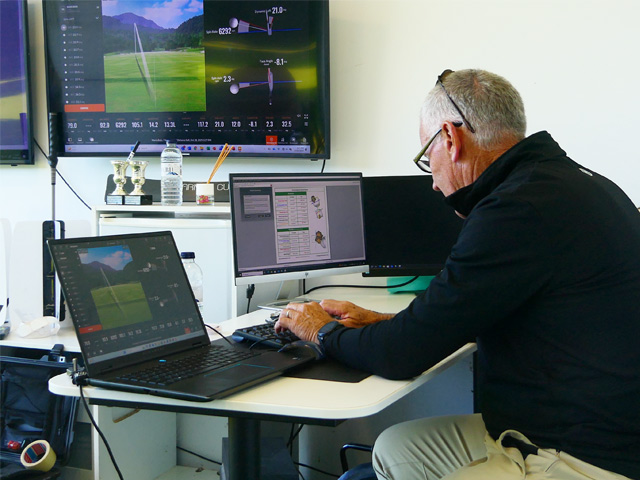
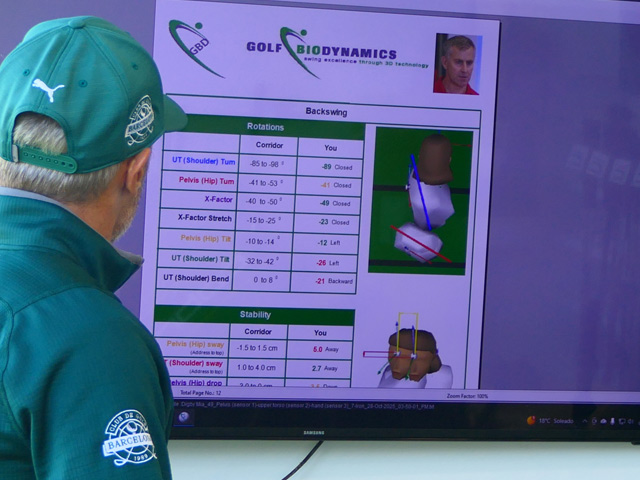
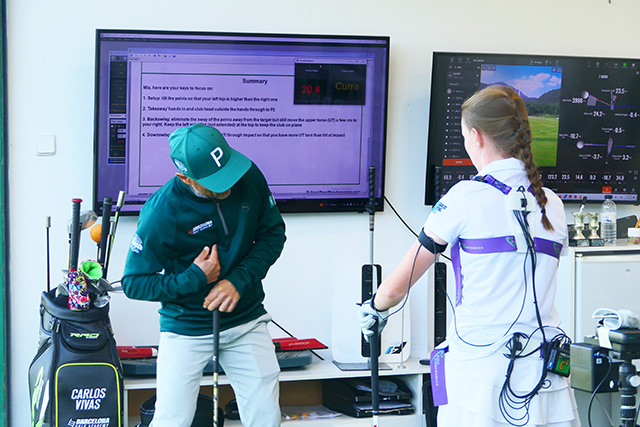
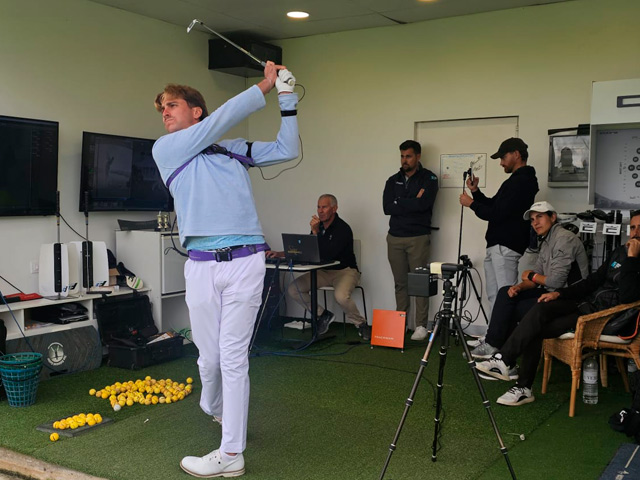
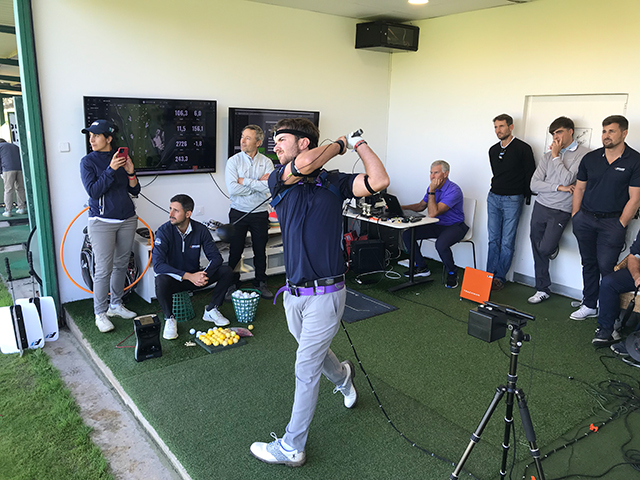
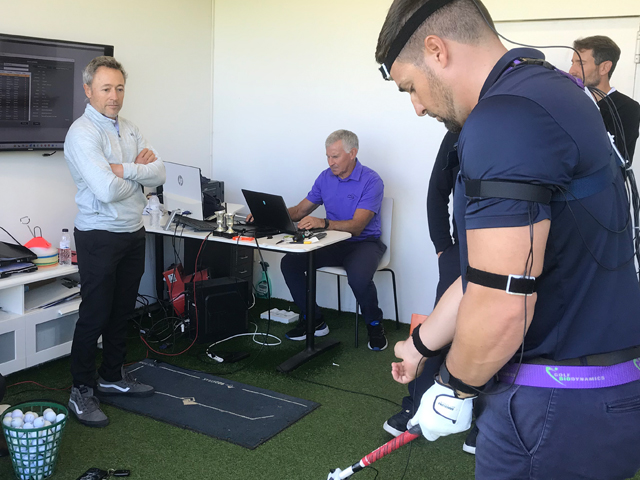
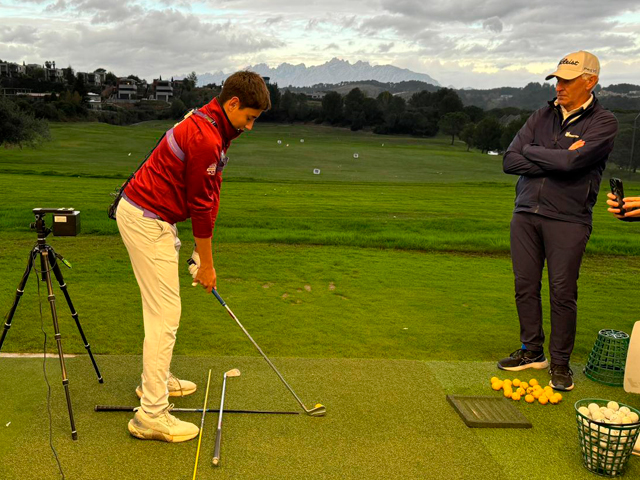
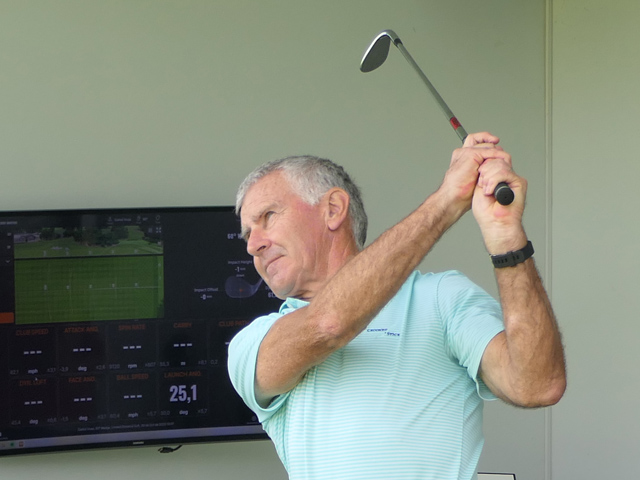
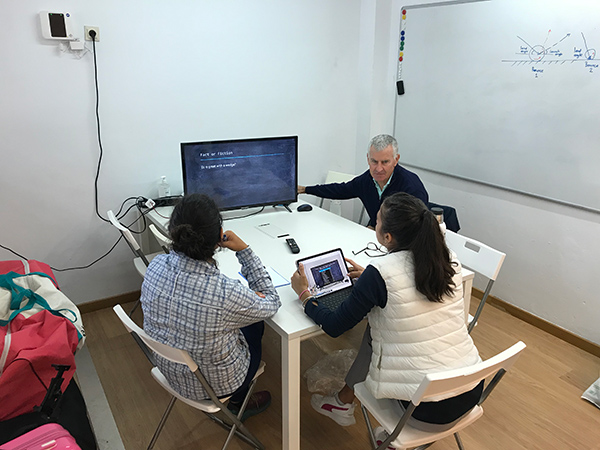
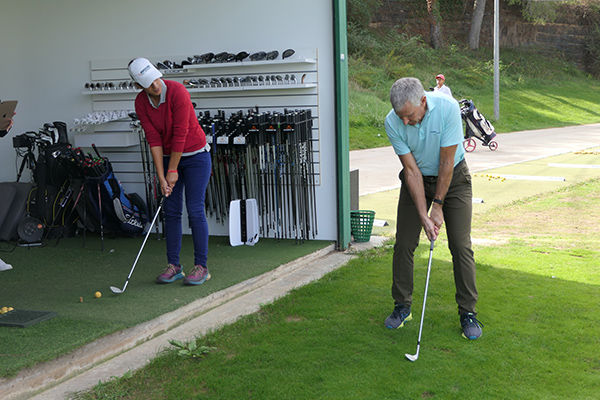
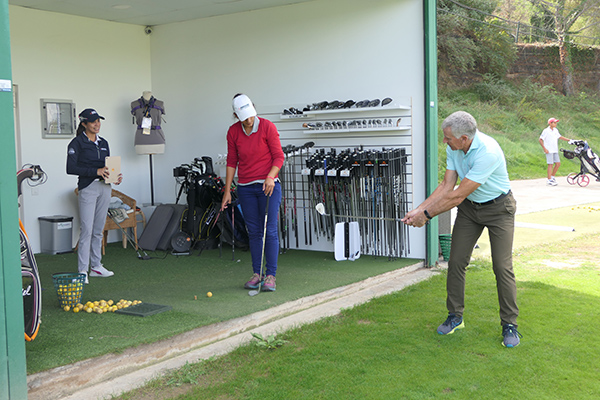
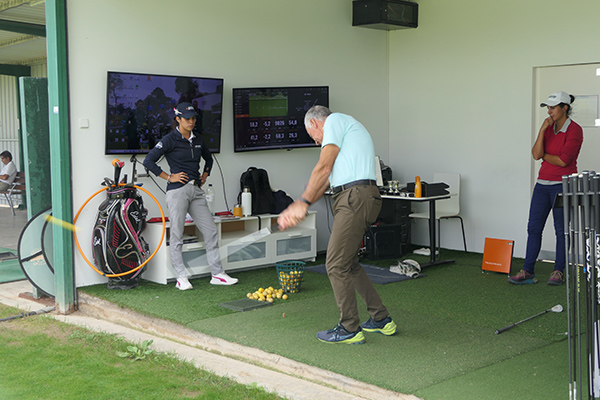
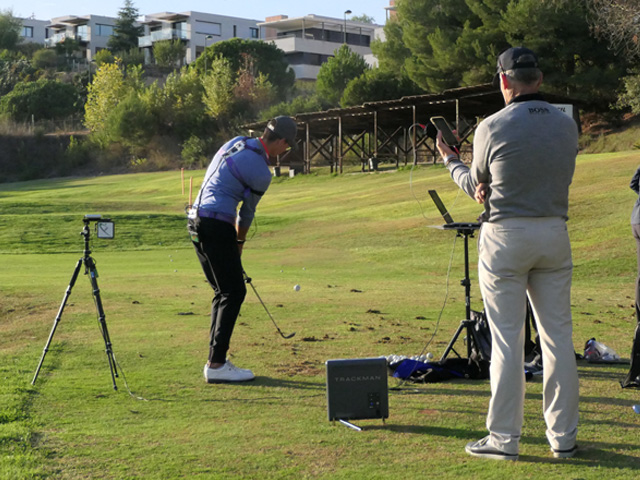
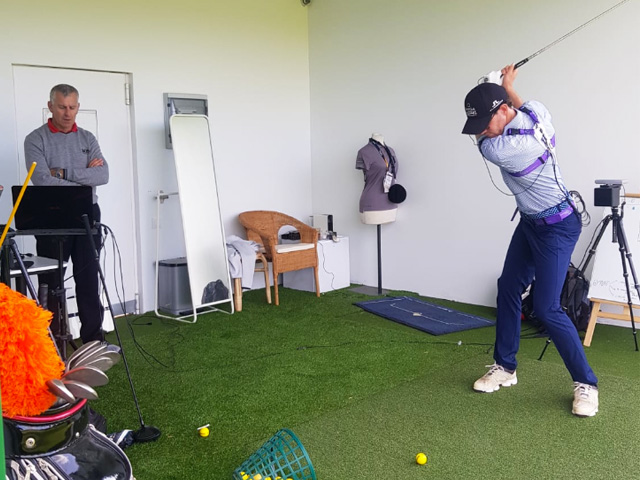
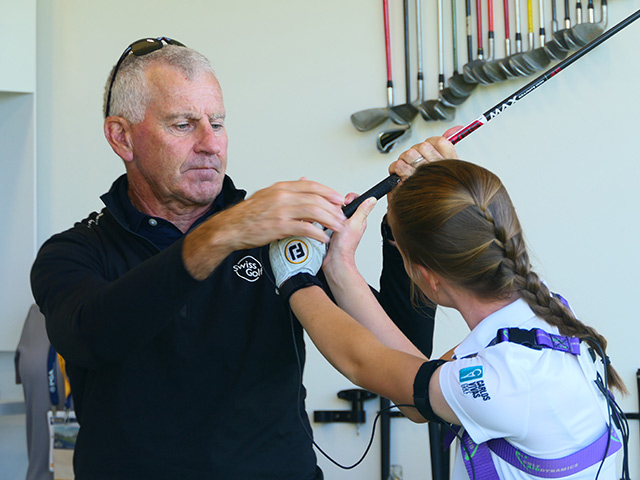
November 14, 2025 — Dr. Robert Neal, one of the world’s leading authorities in golf biomechanics and swing analysis, recently visited the Barcelona Golf Academy (BGA) at the Club de Golf Barcelona, where he worked closely with coaches and junior players on the advanced use of 3D Golf BioDynamics technology.

His presence reaffirmed the academy’s commitment to innovation, technical precision, and continuous improvement in high-performance golf instruction.

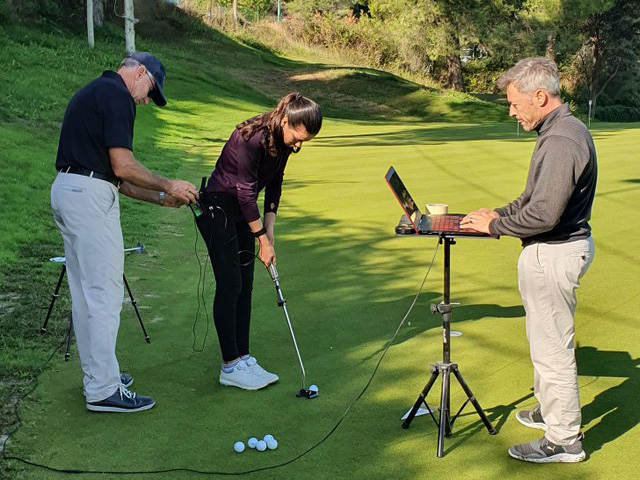
During his stay, from October 28 to 30, 2025, Dr. Neal delivered specialized training sessions for the academy’s technical team, both in the driving range box and on the putting green, focusing on the biomechanical interpretation of the swing and the practical application of 3D technology for all types of shots.

These sessions represented a valuable opportunity to strengthen BGA’s working methodology and to raise the technical knowledge level of its coaching staff.
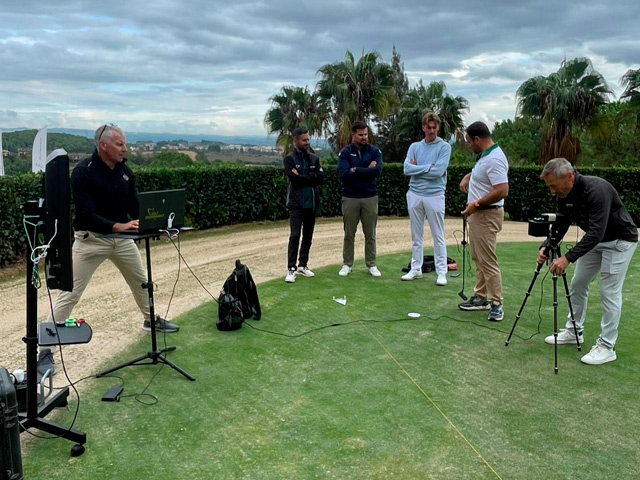
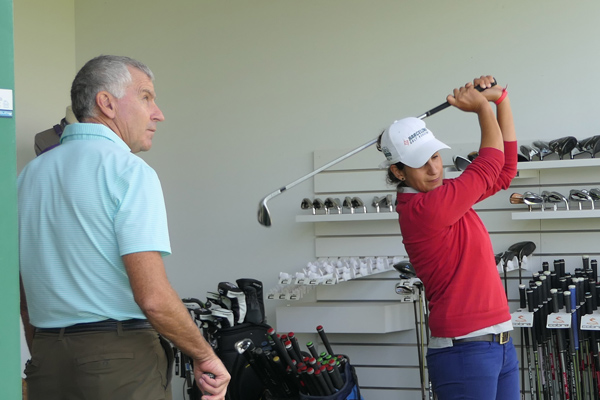
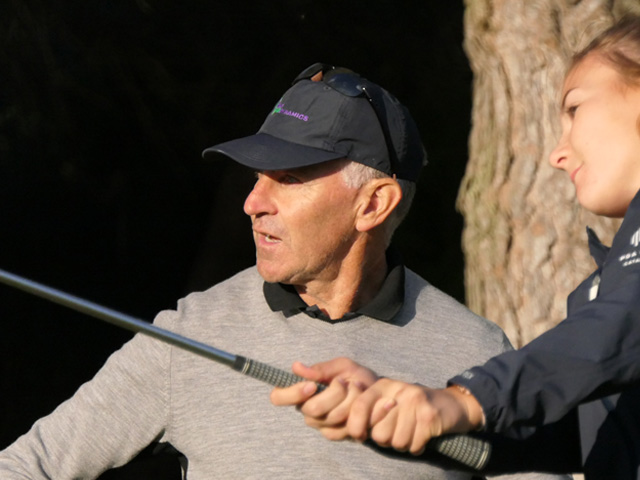
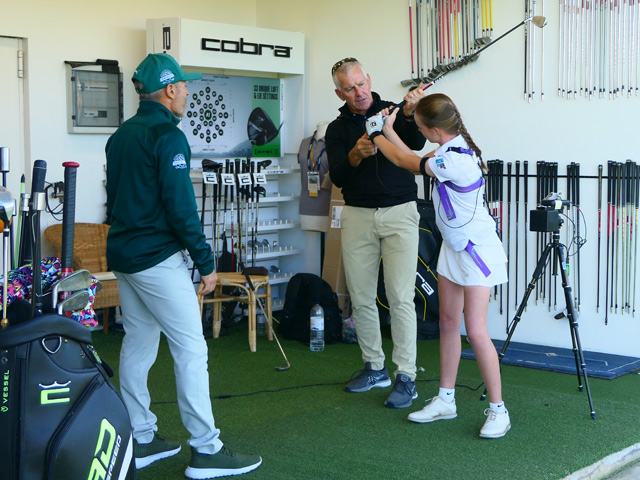
In the afternoons, accompanied by Head Coach, Carlos Vivas, Dr. Neal carried out detailed, individualized swing analyses for players in the Elite Junior Program, providing each with a personalized diagnosis and training plan.

His visit not only helped assess the progress of young talents but also inspired a new stage of technical and motivational development within the academy. In this interview, Dr. Neal shares his vision of modern golf instruction, the importance of fundamentals, and the future of biomechanics in the game.

MYGOLFWAY: Golf is a very complex game, and when you come to Barcelona, a bit of a revolution happens. The coaches and juniors at the academy all want you to make their “swing radiography,” as if you brought a magic elixir or had discovered the secret of the perfect swing. But in fact, how do you see yourself?

Dr. ROBERT NEAL: When I come here to work with Carlos and his team of coaches at the Barcelona Golf Academy, my duty is to help them identify the issues in the students’ swings and also reinforce for them how important it is to pay attention to the little fundamental things that make a golf swing truly effective.

I spend time working with the players, identifying areas for improvement, but I also emphasize to the coaches that they must watch those details and ensure that the practice is done properly — otherwise, the players won’t get better.

MYGOLFWAY: There are several advanced swing analysis systems today. Why would you recommend your 3D Golf BioDynamics system over others?

Dr. ROBERT NEAL: There are many reasons why I like the electromagnetic Golf BioDynamics systems. First, it’s portable, so I can travel with them. Second, they’re quick to set up, very accurate, and perhaps the best thing for coaching is the real-time audio feedback. So, I can set corridors of movement possibilities, and then the player can work with the coach and find out what it feels like to move correctly.

The tone helps them realize that even if a movement feels awful, but I know it’s correct, I’m moving the right way.That’s really valuable compared to other systems that don’t offer real-time feedback.

MYGOLFWAY: Analysis systems can be more or less professional, sophisticated or promoted, but I think success depends mostly on the people, on their knowledge, and on the quality of their human relationship with the players. Do you agree?

Dr. ROBERT NEAL: Yes, definitely. There are more and more systems becoming available, many using AI and cameras. Some are accurate, others less so. But even with the most accurate systems, the real value lies in the coach’s knowledge — their understanding of 3D biomechanics and then how to use that information in developing or building a golf swing. If you don’t have that knowledge, the information you get from a 3D system is almost worthless.

MYGOLFWAY: Do you think junior players should go through the 3D Golf BioDynamics analysis once or twice a year? Why?

Dr. ROBERT NEAL: At least twice a year. Why? Because it allows them to know what to work on, work on it, and then check their progress. It’s a continuous evaluation process: analyze, train, and review. If you can use the system for real-time feedback, even better — so that you don’t have backward steps in the learning process and helps ensure constant progress. Golf is hard enough already; going backwards only makes it more frustrating.

MYGOLFWAY: Motivation and progress are essential for teenagers to stay engaged. Have you introduced anything new or special for juniors?

Dr. ROBERT NEAL: The software doesn’t have a specific junior version, but the key lies in how the coach would use the information to motivate them. You can “gamify” the learning process a little bit to make it more engaging.

You can get them to really focus in on particular aspects of the swing, and when juniors see progress, they get more involved, then they really engage and embrace the system so that they want to keep doing that. It’s a little bit addictive that way. If they notice improvement, they want to keep going.

Also, receiving accurate feedback gives them confidence: they know the coach isn’t just saying, “Good, that looks better,” but that they can verify it with real data. Measuring and quantifying progress is very powerful.

MYGOLFWAY: How have you seen the Barcelona Golf Academy this year? Are the juniors motivated?

Dr. ROBERT NEAL: Yes, Carlos and his team have created an excellent environment for the juniors. They’re good kids, and they work hard. There’s always room for improvement, and Carlos is constantly looking for ways to move forward. I’ve given him a few suggestions to put into practice.

MYGOLFWAY:  What’s next for you in golf technology?

Dr. ROBERT NEAL: I’m continuing to develop the electromagnetic system software because I believe it has enormous value for coaching. But I’m also involved in a markerless, camera-based system, very accurate, called ELVA Golf, developed with a team from Iceland. We’ve been working on it for about 18 months. We presented it at the PGA Show in Orlando this year, and we’ll return next year with a much-improved version.

The big difference is that it’s not portable — it’s designed for studio type scenario with fixed cameras, no cables, sensors, or markers. It’s very convenient, though it doesn’t provide real-time feedback. Every system has its strengths and weaknesses.

MYGOLFWAY: Final question: Then, will you have time for all of this development?

Dr. ROBERT NEAL: Yeah, I hope so. If I go to the PGA Show in Orlando, I’m sure many clubs will be interested. And yes, I’ll need to build a team. Exactly.

Thank you very much for your time, Dr Robert.
MYGOLFWAY INTERVIEW – Dr Robert Neal, the finest swing analyst with his own 3D Golf BioDynamics

December 6, 2024 – Every time Dr Robert Neal, CEO at Golf BioDynamics Inc., stops by the Club de Golf Barcelona, his visit becomes one of the most special moments of the year for the Barcelona Golf Academy of Carlos Vivas, both for the coaches and the pupils.

Having a pioneer and world erudite in golf biomechanics visiting Spain makes the junior players want to get close to him to check their swing. The golf coaches are there too, ready to increase their knowledge about swing analysis, and learn to interpret the valuable, precise data extracted from his advanced 3D analysis software and reporting system, always one step ahead in terms of technology.

In fact, this year professional players like Cameron Davis (PGA Tour), Grace Kim (LPGA Tour) or Thomas Rosenmüller (who won at Korn Ferry Tour and now has his PGA Tour card) have visited him to improve their performance.

And every time Dr Robert Neal comes to Barcelona, MyGolfWay is alert to have the privilege to interview him, as he kindly agrees to provide us with updates of the innovations and progression of his precious technology, as his expertise spreads little by little worldwide. 

MYGOLFWAY: Looking back, how many years have you been on the 3D Golf BioDynamics adventure?

Dr ROBERT NEAL: I first started getting into 3D biomechanics in 1982. And at the end of ‘82, beginning of 83, is the first three-dimensional analysis that I did. From 82 to 2024, that’s 42 years.

MYGOLFWAY: Did you imagine that you’d get this far?

Dr ROBERT NEAL: No, I mean, you just couldn’t imagine what would be possible in my lifetime. In those days, you would film, you would get the film back in a week, then you would digitize by hand. And so it took many hours just to get the initial data. Then you had to run it through a computer and do the analytics. And now it’s just done in real time.

Now you capture the data in real time and you create an avatar. And all the analytics are just there. It’s incredible. That’s due to changes in the sensor technology, and computing power has just been exponential in its growth. Then we used a computer that was the size of a decent-sized kitchen. Now you have more power in your phone than that computer had.

So it’s incredible what you can do. It wasn’t possible to imagine that. Also, at that time in my life, I didn’t imagine that I would work in golf full-time either. I was on a track to becoming an academic and working in a university. And so it’s been a very nice second career, going into golf and working full-time in golf.

MYGOLFWAY: What is your route through Europe this time? Is it like previous years or is there something new? 

Dr ROBERT NEAL: It’s a somewhat similar route to previous years, but I started in Switzerland, did a few days there, then went to Italy where I worked in a national camp for the Swiss, developing talented players and the national team. Then to Germany, kind of similar, working with their national girls’ team. Then here with Barcelona Golf Academy and a bit of coach education, coupled with some work with his junior players. Then I’ll go after that back to Switzerland to work with some junior players in our program development. Then back to Orlando where I am based.


MYGOLFWAY: What do you like more, working with young golfers or with adults, and why?

Dr ROBERT NEAL: That’s really hard question… Probably with young golfers. I think there’s more for me to add to their skill set and experience because of the work that I’ve done over the years.

I do like working with adults. My least favorite actually is working with Tour players. They all think they’re very special and that we should be at their beck and call and that sort of thing. So it’s challenging.

Also, if you’re suggesting changes to be made to a Tour player’s swing or game, you better be very, very confident that it’s going to make them better because that’s their professional career.

MYGOLFWAY: But probably you’ve been in the process of a young player becoming a Tour player.

Dr ROBERT NEAL: Yeah, that’s right. That’s the part that’s probably the most rewarding. You work with young people, they get better in golf, and you keep giving them more information, fine-tuning it, getting their swings and short games to a point where they can first make an impression at a national-level tournament and then maybe international amateur tournaments, and ultimately the very best go on and play professionally. And that’s a nice situation when you can follow them over multiple years.

MYGOLFWAY: Is this what gives you more satisfaction in your job?

Dr ROBERT NEAL: I think so, yeah. It’s just seeing the development. I would say the majority of adults with whom I work, just don’t have the time to dedicate to the training. They’ve got too many other things that they need to attend to. And so they get better, but they don’t get better as rapidly or maybe as much as they would hope. And they don’t necessarily want to be professionals, no.

MYGOLFWAY: Do you have players that don’t understand the technology?  

Dr ROBERT NEAL: Of course, you have players like that. The skill is actually to give them the information in a way that they can understand it. Not just bombard them with numbers or graphs or saying that you have to do this and you must do that. Just put it in a way that allows them to comprehend it and then progress from there. 

MYGOLFWAY: In general, how is your technology used the most? To help players to correct their swing based on a recommended training? Or to help players to fine-tune their swings on the driving range, just before a tournament? 

Dr ROBERT NEAL: Mostly the developmental stages. I don’t think it’s really very beneficial to be using the technology on the range prior to an event. I mean you can do that sort of thing, but the best use is away from tournament play, always working back to what the gold standard is for that player. And then, I think there are some interesting things happening in the technology.

One is that there’s this big push with AI and cameras and phones to try to get rid of markers or sensors on the body. I’m involved in a project with a group of very smart people from Iceland and we’re developing a markerless system so you can just walk into a sort of simulator and hit some shots and it will automatically do the 3D without you having to put sensors on or things like that. But to achieve it, there is still a lot of work to be done.

I think that the best-case scenario will be kind of a hybrid, where you use the wireless technology like Carlos has in his academy, and do real-time feedback but maybe doing the full analytics without any sensors on. So, analytics comes first, with biofeedback training to change movement patterns and make sure that people are getting a good feel for what they need to do. 

MYGOLFWAY: So, you think that the 3D Golf BioDynamics is not going to replace the launch monitors at the driving range of the tournaments?

Dr ROBERT NEAL: No, no, it’s not going to, no. Definitely not.

MYGOLFWAY: Do you think there is still room for improvement in your technology?

Dr ROBERT NEAL: Yeah, there’s always room for the improvement. I mean, I could invest more money in making the avatar look a little more human-like but to me that’s not the most important thing. The most important thing is the underlying metrics and understanding how best to change the way people swing and give them the feedback, the information. It will continue to improve because computing will get faster and so you can do more things.

We’re already coupled with launch monitors, so that’s a good thing. And I think in the next few years I’ll probably integrate force plates so that we know how people are pushing on the ground during the swing and that gives you additional insight. Like an extension of a type of BodiTrack mat that measures pressure, actually the forces under each foot and then the rotations, how you’re twisting on the ground and things like that.

MYGOLFWAY: And especially this year, are you presenting something new in the technology?

Dr ROBERT NEAL: Nothing new in the technology. I would say that nothing particularly new in the last 12 months other than improvements in the way I deliver the information back to people, and making golf coaches very aware of how important dynamic loft is.

I don’t think people have really cottoned on to the fact that, the amount of loft that you hit the golf ball with is crucial to not just how far it goes but how much it spins and things like that. I continue to make updates in the software, adding bits and pieces but more from an analytic perspective and to help golf coaches understand what’s going on.

MYGOLFWAY: And are you introducing Artificial Intelligence in the system?

Dr ROBERT NEAL: Not in software but in the markerless one we are. We’re using neural networks, machine learning, machine vision, all of those sorts of things that are AI-based to really track the movement of a human body swinging a golf club without having any sensors or markers on. It’s a very challenging question.

MYGOLFWAY: Finally, how do you see the team of coaches in Barcelona Golf Academy working with your technology?

Dr ROBERT NEAL: I think they’re a really good example of how you can use the technology to help guide the development of players. Carlos Vivas has been tremendous in making sure that his coaches know how to use it, so that they get continual measurement and testing of players as they go along. And that’s just such an important part of learning. You have to test yourself because you don’t know if you’ve learned until you test yourself.

MYGOLFWAY: And then the junior players, they’re excited about having their swing analysed, right?

Dr ROBERT NEAL: Yes, it’s just become part of and parcel of developing a good golf swing these days. Almost every player in my tour to Swiss, Germany and Spain had been on 3D before and, if not, they ask me for it. So, they actually really like it.

So, they are understanding that just like you would go and train in the gym if you wanted to be an athlete for sprinting, you do 3D in golf because your technique is really critical to your success.

MYGOLFWAY INTERVIEW – Dr Robert Neal reveals the art of the short game through science and his learning methods

November 21, 2023 – Upon his arrival at the Club de Golf Barcelona, a few days ago, he delighted us with a short game & bunker clinic. Every time Dr Robert Neal visits Spain it is a privilege to watch him work with the players of the Barcelona Golf Academy, of which he is a member of staff as Golf BioDynamics 3D advisor. To see and listen to him is to learn from all the wisdom about golf coaching that he carries within.

With more than 30 years of dedication, this Australian coach who lives in the USA is one of the most highly qualified instructors in the world in terms of biomechanics applied to golf, 3D swing analysis, and is used to performing analysis and tests, and giving advice to players of all levels, from Tour professionals to amateurs.  This time he has been in Barcelona where he has focused on teaching how to improve the short game and finesse with wedges. This is the interesting interview he gave us at the club:

MYGOLFWAY: What is Wedge Craft, the art of the wedge?

Dr ROBERT NEAL: First I’ll give you a little bit of background. Layne Savoie (a professional player, teacher NCAA coach and PGA professional) and I started nine years ago to try to understand the science in wedge play. And we formed a company called Wedge Craft, that is a resource for amateurs and professional golfers to get really good information on how to play all the shots from about 125 yards from the green, including shots from the fairway, the rough, the bunker. Shots with the squared clubface at set up, versus where you open up the leading edge and loft. So, it’s a teaching resource on how to really get better at playing these shots in golf. And understanding some of the science that underpins effective wedge play.

MGW: What percentage of importance has the short game for a Tour professional versus the amateur player?

Dr ROBERT NEAL: That’s a good question, but I don’t have the answer off the top of my head. In terms of the number of shots you hit with a wedge in your hands versus the other clubs, it probably equates for a professional, I think, to maybe 30% of the shots that they hit, maybe a little less than that. When you think of a typical round of 70 hits, 30 of those will be putts of some length, which means there’ll be 40 left of which 10 or 12 will be a driver. After that, probably only 6 or 7 shots will be with a wedge, but that is a lot every round.

It’s probably more for the amateurs, because they miss more greens than the professionals, and they should be using wedge shots around the green to get the ball on the green, and probably hit less wedges at greens from a distance, but they would have more recovery shots than a typical professional pattern.

MGW: Can the short game be learned in a faster way than by dedicating hours and hours of training?

Dr ROBERT NEAL: Yes, you can never get rid of the fact that you need to spend a lot of time practicing the short game. That is how you became good. But to accelerate the progress it’s important to understand and develop the right movement patterns that will allow you to be successful. What I mean by that is that you need to develop the right movements of the body for finesse wedges, and these are different to the movement that you will have for the distance wedge with a full swing. Subtly but importantly different. So, if you want to get good at short game, you should not try to use the same technique as you do for your 7 iron. That is not appropriate.

And then, what you have to add on top of that, is that the technique in a bunker is different again to the rest ofthe shots you are playing around the green. The only one that is very similar to a bunker shot is a flop shot, but I don’t encourage golfers to play flop shots. They are a very high risk shot, that typically doesn’t end very well.


MGW: And a part from spending a lot of time practicing, what technologies can be used to improve the short game?

Dr ROBERT NEAL: One of the most important things to do is to have access to a launch monitor, because ofthe way you deliver the club and the way the ball reacts to that. You need a critical understanding of how to change the distance you hit the shot and also how the ball is going to behave when it lands on the green.

So, being able to measure that information is critical. And I have a preference for the GCQuad for short game work, because it does a much better job at measuring the face angle and the dynamic loft, and the contact point, than the radar devices like Trakman or FlightScope. That device predicts what the club face and dynamic loft would be, based on how the ball went out. If the ball gets low you will have delivered with not very much loft, and if it goes out high then the dynamic loft must have been higher in that shot.

Whereas the GCQuad is a Quadrascopic high-speed camera device that takes pictures, which measure what the clubface angle is, and also how much loft has been measured on the face so it is better for short game. In other words, the radar devices are good for the long game, but not as good for the short game.

MGW: What about Golf BioDynamics 3D?

Dr ROBERT NEAL: It is really important for measuring body movements. The launch monitor is great for seeing what the club and the ball did, but it doesn’t tell you how that happened. The 3D allows you to understand how this person moved the body this way, how they kept a really good connection between the arms and the body, if the speed of the arms was the same as the chest, things like that. And these are important factors in wedge play. Being able to know where the body moved, how it rotated, sequencing, and connection between the arms and the body.

MGW: What does a golf coach need to be a good short game coach?

Dr ROBERT NEAL: The first thing they need to have is the correct knowledge. You can’t just rely on the feeling of what you do, or what Seve Ballesteros or Jose Maria Olazabal say they do, because what they feel versus what they do could be quite different. So, the first thing you need to have is good knowledge, what I call domain knowledge about movements of the body, movements of the club, and then how the ball behaves. The workshop we did for the instructors of the Barcelona Golf Academy was to give them knowledge, and then we did the practical part. Once you’ve got the knowledge, then it is important to know what activities and drills will help your player to learn the skill and the technique which is appropriate for the shots they are trying to hit.

So, a good golf coach is able to select the right drills to do in order to improve technique and then the right activities to ask students to do in order to develop the skills at landing the ball on the appropriate spot, being able to take off spin when it’s appropriate, to know how the ball is going to behave when it comes out of the rough versus off the fairway, knowing that they can change the trajectory of the shot by changing the club but not the technique.

MGW: Then, what are the essential elements?

Dr ROBERT NEAL: In finesse wedge play, what the player needs to do during the backswing is counter intuitive and opposite to what you would do in full swing, for example. So as your body is rotating in your backswing, you need to move toward the target with your pelvis and upper torso ahead, and probably down a little bit. And then, on the down swing as you unwind, you’ve got to stay on the lead side and rise up, and that allows you to shallow the delivery of the club.

One of the worst disasters in finesse wedge play is when the player starts backing up, and tilting away from the target, because then the contact point, or low point in contact with the ball, gets compromised.

So, getting toward the target, rotating and going up, is what I call pivot-plaining. As you pivot or rotate, you have to rise up the plain, you go up and away from the ball.


MGW: What can amateur players learn from watching the short game of Tour professionals on TV?

Dr ROBERT NEAL: They can learn that these guys are incredibly good with the wedge. They can hit shots that are amazing and I’ve been telling people since the Ryder Cup that the wedge shot that Rory McIlroy hit on the 17 hole in the afternoon matches is the best finesse wedge shot I have ever seen. It is so remarkable. He swung it probably around 50mph for maybe a 25 yard shot, and it came out with a pretty low launch and went down spinning and spinning to finally grab near the hole. A really, really high spin shot, extremely difficult to do. One of the things that made that shot so remarkable is to do it under the intense pressure of a Ryder Cup, with a match on the line. He could have been made to look really bad, if he hit it a little bit fat or a little bit thin, going far away or coming back to his feet, so it was an incredible shot.

So, what can you learn… Not all the Tour players hit the shots exactly the same way. For example, Jordan Spieth is very steep in his finesse wedge shots, always taking a divot, always leaning the shaft a long way forward. Other players like Justin Thomas or Rory are equally good with the wedge. They’re nowhere near as steep. They’re much shallower with most of those shots they play around the green. Steve Stricker is really good with the wedge, he is an excellent model like Jason Day. They are excellent models for amateur golfers to copy if you are watching Tour players.

MGW: To dominate the short game also depends on the club. Are there some brands that customize the clubs better than others, offering a better performance with the wedge? 

Dr ROBERT NEAL: For disclosure, Titleist support me, so I think they have the biggest range and the best wedges on the market. But having said that, I think the other companies like Cobra, Mizuno, TaylorMade, Callaway, Srixon, Cleveland… they all make good products. Nobody makes a bad wedge.

MGW: With so many lofts, bounces, grinds, reliefs… Is it difficult to choose or find the right short game clubs for each amateur player? 

Dr ROBERT NEAL: You can get wedges with a big range of bounce and grind, all different lofts, but sometimes the more choices make it a little more difficult for the fitters as well. Then, the two most important things other than technique are:

1) What type of grass you are playing from? And conditions? Firm, dry conditions versus soft, wet conditions? Because in the soft wet conditions, more bounce helps you.

2) The second thing that is really critical is, are you comfortable opening up the leading edge of the club? If you are comfortable, then the size of the bounce, and particularly how much bounce there is around the heel, is important. Because if you never open up the club face, then the bounce is important to the conditions, but it doesn’t change the nature of where the leading edge is, if you never open up the leading edge. We open up the leading edge on a club that has a big bounce, with a big sole, that really lifts the leading edge up a lot, and so there are implications for how you can play shots with that type of wedge design.

MGW: Is the angle of attack perhaps the most important part to control in the short game?

Dr ROBERT NEAL: In the short game you need to be able to change the attack angle. So, for example, most finesse wedge shots you want to be pretty shallow with your attack angle. But there are other times, when it needs to be quite steep. When you are in deep rough, you need to get the club down more steeply, so you’ve got to be able to change the attack angle. If you don’t know how to do that, then you are not going to be very effective hitting shots in those conditions.

If you are playing a 7 iron you are not going to be trying to hit one shot with a 5 degree attack angle, and on the next shot try to make it 10 or 12 degrees. That doesn’t happen in full swing. In full swing you try to deliver the club pretty much the same on every shot. Whereas in finesse wedge play you pretty much need to read the conditions and in select the appropriate attack angle. That’s going to make the shot effective.

MGW: Finally, how do you see the evolution of the Barcelona Golf Academy and compared to other similar in Europe?

Dr ROBERT NEAL: I keep saying to Carlos Vivas and another people that I’ve seen over the years, that Carlos continues to grow and develop as a golf coach. And now as a leader of a golf academy, he’s really instituting things in his program that help his players and his coaches. He is always trying to get his coaches to be better educated, learn more about how to make the players learn better, to give them variety in their practice and making life interesting for them.

And as a golf coach himself he has always been seeking knowledge, and trying to become the best golf coach he can, and I think the students who attend the academy now get a much better product than even five years ago.

The fact that the school, the golf course, the gym… are all onsite, in one place, means that it’s a safeenvironment for them. There are other kids, around not just golfers, and living conditions are really good for them. So, it is safe for the parents to feel like it is an excellent place to send their child, and they get better at golf. I think this academy is as good as anything you can find in Europe right now. It is a great place, with great weather here in Barcelona.

A the picture, Dr Robert Neal with Jose Maria Olazabal, champion of two Masters and course designer of the Club de Golf Barcelona, and Carlos Vivas, Head Coach of Barcelona Golf Academy.

Interview – Dr. Robert Neal, advisor to the Barcelona Golf Academy, explains the progress of his Golf BioDynamics

February 27, 2022 – About two years had passed since Dr. Robert Neal, one of the world’s most recognized gurus in golf biodynamics, has come to Spain, blocked by the Covid pandemic. So, his visit to the Club de Golf Barcelona at the end of last year, to visit the Barcelona Golf Academy (BGA) and its Head Coach, Carlos Vivas, was quite an event.

A small but noticeable revolution arose amongst the staff, pupils, members, coaches and instructors, all eager to learn from his wisdom and absorb his valuable advice about each person’s swing. You could see it all reflected in his sophisticated Golf BioDynamics software, which improves every year with new applications.

At MyGolfWay we went to meet him, and after finding out from him that he has recently been working with some PGA Tour stars like Cameron Davis or Justin Thomas, we had the privilege of having a more in-depth chat with Robert. This is what he told us:
MYGOLFWAY: What feelings do you get about the Barcelona Golf Academy?

Dr. ROBERT NEAL: It’s been about two years since I was last here with Carlos, and it’s been nice to see how the Club de Golf Barcelona’s academy has grown. Unlike his previous club, this one has focused on his project. It has great facilities with a teaching center called ‘The Box’ on the driving range, with all its technologies: 3D, Trackman, cameras, video system, a lot of teaching aids… which are wider and more accessible, with a nice short game area, the putting green next door…

Then, it has its office area in the clubhouse itself, where the coaching staff can come. And then downstairs there is a big gym specifically for golf, the academy’s locker room, and even an indoor hitting bay. Here he’s found a golf club that supports his project, and that is why it’s really grown. Now he has a dozen players in the elite program, who go to an international school very close by; and he also has about 75 children who come a couple of afternoons and then on the weekends. So, I think it looks great.

MGW: How would you consider the BGA at European level?

Dr. ROBERT NEAL: I think it is on the right trajectory to become one of the most important academies in Europe. It takes a lot of work to get all the cooperation: the club, the school, the staff… and Carlos Vivas is really getting it together. He already has a good group of coaches, and that was one of the primary purposes of my visit: to do some training with the coaches. So, we have decided to do a certification platform that they will complete online, mostly about biomechanics; and then when I come back in 2022, I will continue on that certification.

But I don’t think anyone in this area comes close to what Carlos has been doing. Because his attitude is very good, just going ‘step by step’, and just keeping going. He already has many local and increasingly international students… So, he has a good plan.

MGW: What has you been doing during this stay at the Club de Golf Barcelona?

Dr. ROBERT NEAL: The BGA has one of the 3D systems with my software, and since in 2021 I completed it to be able to analyze the movements of the wrist, elbow and shoulder motions, we have worked with the players of the academy, teaching Carlos and his team of instructors how to work with the new tool. You have to know the calibration method and understand the information, so that you can use it regularly at training with the players.

MGW: Indeed, looking at the swings of Dustin Johnson, Matthew Wolff or Jon Rahm on the Tour, for example, the position of the wrists and arms has been the subject of intense debate in golf lately. How has your Golf BioDynamics software advanced in this aspect?

Dr. ROBERT NEAL: Mostly we would say that we coach towards an optimal technique. When you look at wrist or shoulder motions, it’s not like you strictly have to do it one way. But there are certain characteristics about the movement that are characteristic of a good swing mechanics. And that’s what we’re teaching the juniors in the BGA program. Modifying their technique if it’s not optimal, but if they do it in a way that’s good, then we wouldn’t change it.

As for the Tour controversy, backswings can look very different, but downswings can’t. In my opinion, I would probably stick to the middle ground. My preference is a fairly flat left wrist – on right handed players –, but I’d like to see the left wrist go immediately towards flexion as the downswing start; so that this has the effect of taking loft off the club, making it a bit safer into the impact; while also helps you to get the clubhead behind you a little bit so you don’t get over the plane.

It’s much better to get the flexion earlier in the downswing, because you know that on impact you have to be starting to extend your wrist; which doesn’t mean that you are extended at impact, but you are moving it in that direction. That’s the primary requirement for hitting good golf hits: you need to be in good flexion, moving towards extension, but still flexed on impact.

If you don’t do it that way, it’s very complicated to react in such short period of time. Very few can do it, like Phil Mickelson or Vijay Singh, but most people aren’t successful doing that. If that’s the technique you want to employ, you must be prepared to hit a lot of golf balls, so you can learn to control that ability. And if you have extreme flex at the top of the backswing, like Dustin Johnson, then you have to learn how to control the release of the wrist; whereas going first into flexion and then into extension is easier.

MGW: In what other features has your software improved this year?

Dr. ROBERT NEAL: I keep adding features to the software that make it easier to use and suitable for working on various forms of Windows. Some of the updates have added launch monitors, to measure the club and ball. The basics of the putting and short game areas are the same, but are now more feature rich, with information at a practical level. I’ve also added new graphs to help understand the swing better, and little things that make it easier for coaches to use. Finally, I spent a lot of time upgrading the software for the new hardware version, which is much faster, but you need a much more powerful computer to use it.

MGW: What have you discovered in the BGA junior players?

Dr. ROBERT NEAL: Most of them are developing pretty solid techniques, because Carlos and his coaches have been quite strict in certain aspects of body movements, arms, coordination and technical details, so I think they will continue find success, if they then want to continue and play college golf. Physical training is very important here, for example to develop speed, as this will help them become more stable, consistent and powerful in their golf swings. And if they have to make any changes, sometimes you go backwards a little bit first before you derive the benefits; but then the juniors will be happy to hit better shots.

MGW: Many people can improve by training with a software as sophisticated as Golf BioDynamics, but they are unaware… At what ages or handicaps can they benefit from it?

Dr. ROBERT NEAL: Yes, a lot of people think this is just for elite and professional players, but it’s not. It is for everyone who is keen on golf and wants to get better.

I don’t think it is handicap based, it is depended on your commitment on getting better at golf. You could be on a 25 handicap and decide you want to get really good at golf. Then, from my experience, this technology can really help you a lot, developing guided training. You could also be a 5 handicap who just wants to come and see how you are doing your swing, but in that case we aren’t interested, because this is not an entertainment.

To establish an age range, I would say no less than 13 years old, although I don’t often work with children that young. The normal thing is to work with juniors, adults and seniors. With the latter, sometimes there are older people who have limited mobility to play, and in that case we have to find a different solution for them.

That is our mission, to discover the optimal solution for each person who comes to you.

Thank you very much Dr. Robert Neal. See you on your next visit to Barcelona.

Pictures: ©MyGolfway

Golf BioDynamics – The academy of Club de Golf Barcelona has incorporated the latest technological innovations

April 17, 2020 – Virtual golf events, golf courses working on renovations and maintenance, golf lessons for amateurs on social networks, live sessions with Tour professionals on Instagram, webinars for managers and golf coaches… Golf doesn’t stop at almost any level, especially the technological side.

This abrupt stop caused by the Covid-19 pandemic hasn’t made the golf industry lose its enthusiasm, and it’s as ready as ever to serve its golfers. The academy of the Club de Golf Barcelona, in Spain, directed by golf coach Carlos Vivas, is taking advantage of the time by adding the latest applications of the sophisticated 3D Golf BioDynamics software. This is the only official distributor in Spain for the instruction of golfers, and is highly appreciated both by amateurs and by local and Tour professionals who have used it.

The last update was added at the beginning of November 2019, with the visit to the EIBGA (Elite Intl. Barcelona Golf Academy) at the Club de Golf Barcelona Golf, by one of the top world gurus of golf biomechanics, Dr. Robert Neal, creator of the software. The technological development is constantly evolving towards the perfection of the golf swing, with a detailed customized analysis for each player. A few months ago, head golf coach Carlos Vivas updated his 3D Golf BioDynamics with the new pitching application, completing the operation of the software for every part of the game. And now what?

“Given the circumstances of the coronavirus, as has happened with elite athletes of other disciplines, we now supervise the activities of the academy of our students in a virtual way”, says Carlos Vivas. “Players have a golf challenge written out that includes physical exercise at home and, for example, distance control when putting.”

“On the other hand, I have been working on incorporating the latest innovations into our 3D Golf BioDynamics teaching method,” he continues.


Ver esta publicación en Instagram


Practicing with the Freedom System by @drrobneal3d and his GBD Software, we are able to do a “proper” digitized calibration of the body segments and create a 4-segment model of the lead arm and upper torso. Thus, we can calculate, using established biomechanics principles ALL the joint motions of the wrist, elbow and shoulder including: Wrist flexion-extension Radial-ulnar deviation Forearm pronation-supination Elbow flexion-extension Shoulder internal-external rotation Shoulder flexion-extension Shoulder AB/Adduction NO OTHER wireless system is able to do this in real time and with such ease of use!!! Only at @barcelonagolfclub and @elite.intl.bga #golfcoaching #tourcoach #technology #touracademy #3Dtechnology

Una publicación compartida de Carlos Vivas (@carlosvivascoach) el

Many more variables can now be customized from the initial screen. The new setup option allows us to control the upper body, the lead arm, the angle of the wrist and the golf club release patterns.

The new app includes:

  • Wrist flexion-extension
  • Radial ulnar deviation
  • Forearm pronation-supination
  • Elbow flexion-extension
  • Shoulder internal-external rotation
  • Shoulder AB/Adduction

“By practicing with the new Freedom System, in contact with Dr. Rob Neal and online with his 3D Golf Biodynamics software in digital mode, we can now do a proper digitized calibration of the body segments, and create a 4-segment model of the lead arm and upper torso.”

“In this way, using established biomechanical principles, we can calculate ALL the articulated movements of the wrist, elbow and shoulder.”

“Until now, no other wireless system in the world has been able to do this in real time, and with such ease of use, as 3D Golf BioDynamics, and here we have it,” concludes Carlos Vivas.

Without a doubt, when the confinement time is over, the pupils of the Club de Golf Barcelona will be able to have 3D Golf sessions at The Box High Performance LAB station, with the most precise information ever, to help them achieve their most excellent swing.

More information at www.eibga.com and on Instagram: carlosvivascoach.

Golf BioDynamics – The EIBGA of Club de Golf Barcelona updates its technology handled by Dr. Robert Neal

November 6, 2019 – It is a great privilege that one of the world’s best known golf biodynamic gurus, Dr. Robert Neal, has come to Spain. So MyGolfWay went to meet him for an exclusive interview during his visit to the Elite Intl. Barcelona Golf Academy (EIBGA) at the Club de Golf Barcelona.

The creator of the sophisticated 3D Golf BioDynamics comes often to Europe on a tour. He travelled from his headquarters in Orlando, and this time after visiting Switzerland and Italy, made a stopover in Barcelona before returning to the US. Dr. Robert Neal has spent four days of intense work together with Carlos Vivas, head golf coach of the new EIBGA and certified in 3D Golf BioDynamics. This is one of the most innovative and advanced instructional methods to achieve excellence in golf swing through 3D technology, which many of the best golfers on Tour have turned to.

Robert’s mission was not only to update the software with the new pitching application, thus completing the popular versions of swing analysis for the long and medium golf game, and of putting; but also to meet and educate the instructor staff of the EIBGA, of which he is coach advisor; to analyse and improve the pitching with the 3D Golf BioDynamics of outstanding junior pupils of the Academy like Maxim Danilin, Alisa Khokhlova, Jordan Schmid, Joan Panisello, Vladimir Taldikyn or Marc Pantaleoni, among others; and do a demonstration in front of several members of the Club de Golf Barcelona.

Luckily, Dr. Robert Neal found time in his busy agenda to answer some questions, and update us on his 3D Golf BioDynamics:

MYGOLFWAY: In the last couple of years, what have you improved in the 3D Golf BioDynamics?

Dr. ROBERT NEAL: The most important things that I’ve added to the system that Carlos has are two new models, with two different areas of the software: one to look at pitching technique, and the other to exam in detail the movements of the left arm during the swing. So that you can understand the movements at the wrist joint, the elbow and the shoulder. That was not possible in the previous version of the software.

And the pitching has come out of the research work that I’ve been doing with the technique with Tour players for shots that are generally under 100 yards. So, we examed the best players in the world, how they hit shots from 10, 20, 30, 50 and 75 yards. And we looked at how they hit sometimes with the leading edge rotated to the right of the club, what people traditionally call ‘open clubface’, and then we looked at other shots out of the bunker, and also out of the rough.

So we have a very good understanding now of proper technique for short game, and some of the variations you can use to hit those types of shots. Because its not just as straight forward as the long game where you try to do the same thing every time. With short game you’ve got such a variety of shots around the green complexes that you have to be able to change some of the key club delivery parameters such the angle of attack, shaft lean, or club hit speed. But you don’t do that in the long game where really you’re just trying to hit the same each time.

MGW: Now the software can work for every part of the game. What’s next then? 

Dr. ROBERT NEAL: We’ve covered all of the skill bases. I think the next step will be probably to continue the development of technologies and also to better track changes over time. So if I examine a player today, and then again in three months time and six months time, I’ll be able to track how the player’s technique is changing as a function of time, and maybe look at other things we have worked on. The software is a little weak in that area right now, as you have to do it manually, but I would like to build a mechanism for tracking the change over time.

MGW: How many times do you recommend for an amateur player need to go through the 3D Golf BioDynamics? One a year, twice? 

Dr. ROBERT NEAL: It depends on what the goals are. So for the kids in the junior academy here at the Club Golf Barcelona, for example, I would recommend they be tested probably once a month. It doesn’t have to take very long. The Tour player who is already established may only be seen once a year for a very detailed analysis as they do the golf setting each year, and they decide what the priorities are… I think that for the typical amateur players or the club golfer may be twice a year would be good for them. It might not necessarily be on a focus of a technique lesson. An analysis might be more about giving them feedback. For example, something like ‘you’ve started swaying your hips again … lets do a quick feedback session to give you the feel of what it’s like to turn properly’.

Obviously if you have access to the technology you can use it more often, like here, and it helps you keep on top of any of the techniques that are especially important.

MGW: What Tour players have used the 3D Golf BioDynamics? 

Dr. ROBERT NEAL: I’ve been with Justin Rose, Charles Howell III, Graeme McDowell, Rory McIlroy, Henrik Stenson… in the last few years… Yes, they like to exam what are they doing, and it’s kind of fun to work with them, but typically there are not many ways you can make many changes, because you really can’t ask Rory to change his swing, ha, ha, ha! You can find little things about short game aspects and they can get a lot of value from that. Prevention of injuries is another important aspect, rather than trying necessarily to improve or change their technique. It is more about how to make them more efficient in what they do and particularly prevent injuries, in concrete for the long game, as the short game is different story.

MGW: What do you think about the new Elite Intl. Barcelona Golf Academy at Golf Club Barcelona?

Dr. ROBERT NEAL: I think that coming to Club de Golf Barcelona has been a great step for Carlos Vivas, to break away from before and get a new start, with a new perspective on things, to find an environment that is supportive of what he is doing. He is so enthusiastic and is driven by the whole junior team academy. He is going to be very successful for sure.

The investment in the teaching studio, ‘The Box’ as he calls it, has been awesome and I am sure the players are going to benefit a lot from it. The discipline with which I’ve seen him work in terms of structuring the programmes since he started doing this has been incredible. It is all very well organized and takes a lot of time, work that people don’t see. With his spreadsheet organization, when kids come here and they know exactly what activities they are going a do, and how many shots they are going to hit, what the practice routines are…

They are now young golfers with good potential to become great players. The kids I’ve seen these days have improved a lot since I saw them two or three years ago, and this is because Carlos has become technically a better coach and he is also much more rounded in his understanding of how to motivate kids to do things, and get them working in the right direction.

More information at www.eibga.com.

Pictures: ©MyGolfWay.com and ©EIBGA

Instruction – The season begins at Junior Golf Academy by Sant Cugat

JGAbySantCugat-1

September 10, 2014 – With the start of the school term, the Junior Golf Academy (AGM) of Sant Cugat Golf Club is back, loaded this 2014-2015 season with incentives for children who want to have fun learning golf.

The JGA by Sant Cugat has prepared three new programs covering pupils of all categories (pre-benjamín, benjamín, alevín, infantil, cadete, boy/girl and junior) and any level of play. This is a fun extracurricular activity open to children (members and non members), with the principal purpose of enjoying golf.

The FUNGOLF Program is ideal for learning by acquiring and laying the foundations of golf through varied and fun games and exercises, each with a specific purpose. The PERFORMANCE Program is designed for aspiring golfers who have competed or intend to start playing tournaments. And the ELITE Program includes a comprehensive training plan focused on juniors already competing in local, national and international events. In recent years several young players have emerged from the academy such as the siblings Manel and Patricia Bardají, Enrico and Nina Rissi, as well as Maria Blasco and Paula Solà.

JGAbySantCugat-2

Courses start in mid-September and include equipment, golf balls, fitness training and technical and physical reports for kids, while there are sports psychology programmes, analysis and sessions in 2D, Golf BioDynamics, club fitting and FlightScope, the most advanced technology for golf training at present, aimed at elite players.

On Saturday 20th of September at 8pm the courses will be presented to parents at Sant Cugat Golf Club.

The JGA by Sant Cugat is directed by the golf coach Carlos Vivas, with a renewed team of golf instructors including Jesus Chaves and Pepe Jimenez, and technical areas headed by Berta Folch (psychology), Cari Hernandez (fitness) and Ines Tusquets (nutrition), and assessment by Dr. Robert Neal (Golf BioDynamics) and Antonio Corgos (national athletics coach).

More information: tel. 695 675 006 and www.golfcoachingbarcelona.com.