
Golf & Books
Books – ‘The Golf Courses of Javier Arana’, by Alfonso Erhardt
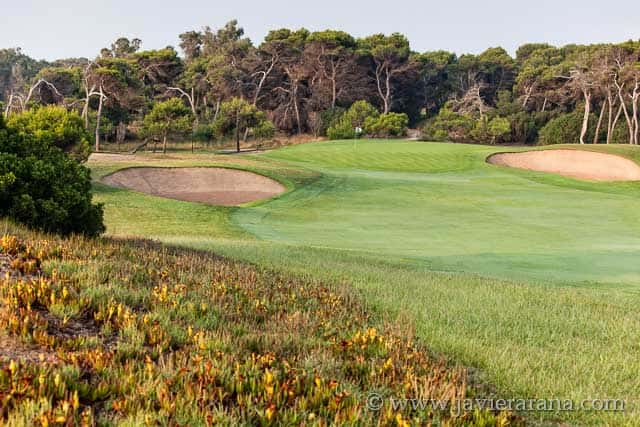
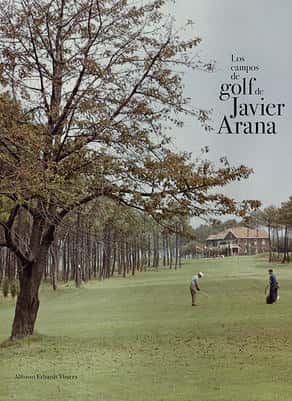 January 27, 2014 – Today, the Royal Spanish Golf Federation (RFEG) hosted the presentation of ‘The Golf Courses of Javier Arana’, a book written by Alfonso Erhardt and edited by Turner, which focuses on the major national course designer and key figure in the development of golf in Spain.
The designs of Javier Arana (1905-1975) are regularly ranked among the best courses in Continental Europe and his masterpiece, El Saler, is regarded as one of the greatest courses in the world. Despite his magnificent architectural legacy, he remains a relatively unknown character for most golf enthusiasts. Arana also had time to stand out as amateur champion, international referee, greenkeeper and founder of the RFEG during his life dedicated to golf.
We interviewed the book’s author, Alfonso Erhardt, golfer, enthusiast of golf course design and amateur writer who became involved in the project due to his interest in the figure of Arana. It is thanks to him that we can now discover the richness of the personality, the career and the creations of Arana.
MYGOLFWAY.COM: How did you come to publish a book about the work of Javier Arana?
ALFONSO ERHARDT: The book grew out from an article I published in Golf Course Architecture, a magazine specialized in golf course design. An English friend, the magazine editor, asked if I could prepare an article about Javier Arana for a section of the magazine called “Pioneers”. I had the good fortune to meet the Arana family, and after speaking with them I decided to write the article. Until then, I knew no more about Arana than most Spanish golfers: that he was the designer of some of the main Spanish golf courses. And not much more. From my conversations with Arana’s family I discovered a magnificent archive with pictures, letters and maps that have documented part of the book.The other aspect of the book is to provide golfers a context for the preservation of Arana’s work. The work of designers of prestige like Arana is carefully looked after in countries with more golf tradition. My intention was that not only the general public, but also golf clubs and owners of Arana’s courses, had a frame of reference within which to place their course in order to ensure that his work maintains its integrity in the future, considering that it is the legacy of a unique work in Spain, and I think it deserves to be protected.
MGW: How was the book written?
AE: The development process has been quite laborious. From a historical point of view, I have used documents from the Arana family’s own documentation, which includes photographs, letters and drawings as well as extensive information and specialized press and magazine publications from 1920-1970. I have had the invaluable collaboration of clubs which have made their photographic archives available to us and, of course, we have made a number of visits to the clubs to take pictures, walk the courses, interview people who participated in their construction, etc.MGW: How would you define the style of the designs of Arana?
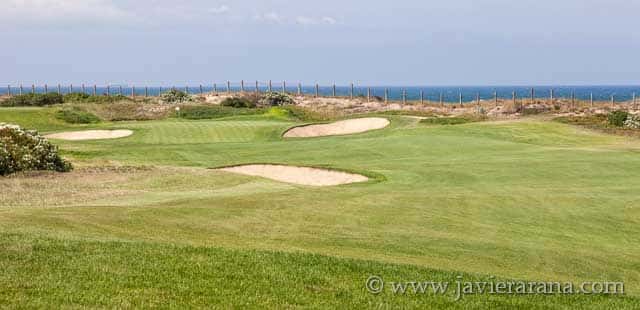
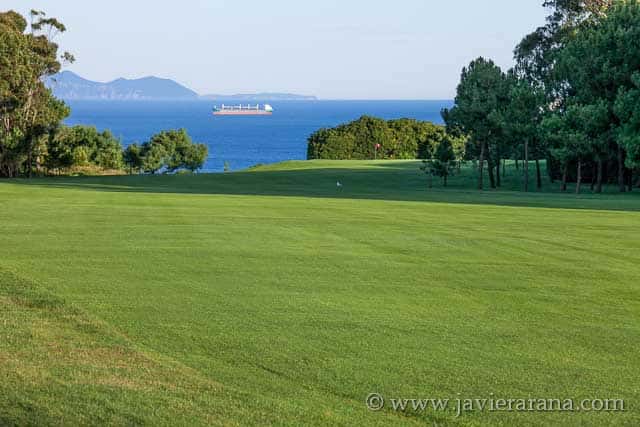
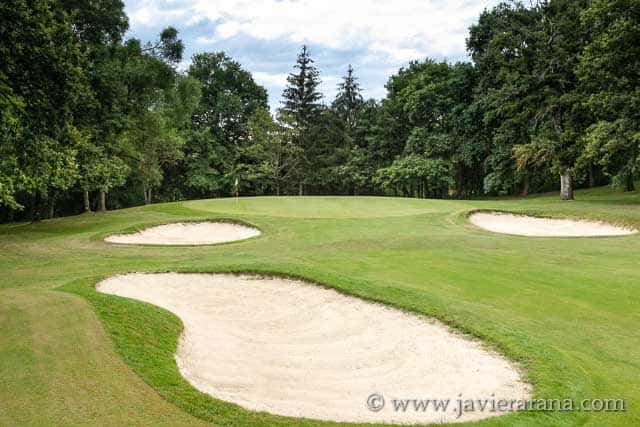
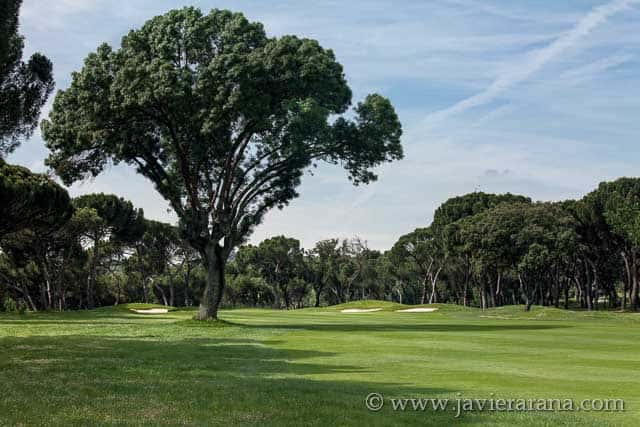
AE: The style is quite simple, if you compare it to what you find today. From the visual point of view, his courses are not very spectacular, as they have few bunkers, no water hazards and greens of relatively simple shapes. However, from a strategic point of view, the intelligent placement of obstacles means that they continue to attract the interest of players of all levels. The use of resources such as a green with a slope front to back, or the orientation of a green at an angle to the fairway mean that Arana’s designs are still valid 50 years after they were built.MGW: Why didn’t Arana design any courses outside Spain?
AE: Arana received several commissions from abroad, mainly in France and Portugal, where he had friends from his playing days. However, for various reasons these projects were never carried out (or at least not at the time Arana was involved).
MGW: Can you tell us about any curiosity or discovery you experienced during the preparation of the book?
AE: What has surprised me most is Arana’s insistence that the courses must be well maintained to ensure the enjoyment of the players. His letters requiring clubs to pay more attention to maintenance were constant, and were a source of many arguments with clients. Another interesting thing is the discovery of two designs by Arana that are not listed as such. The golf courses of Son Vida and Son Servera, Mallorca were both initially commissioned to Arana, but works were stopped half way through, and taken up again some time later without later without the presence of the original architect (thus avoiding payment of his fees). They are not a hundred per cent Arana, but if you bear in mind that the routing is his, the courses have certain qualities inherent in his designs.
THE PHOTOGRAPHER
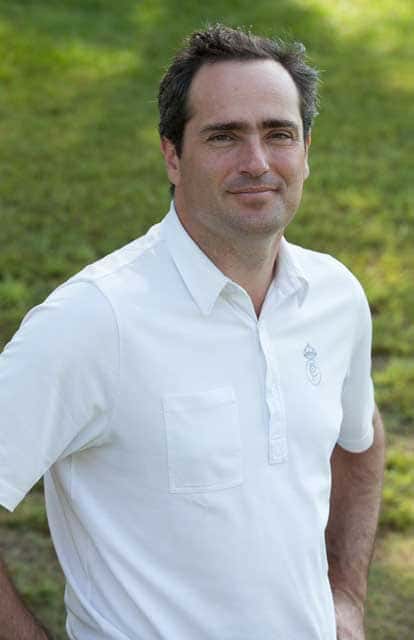
Another of the protagonists of the book is the photographer, Mario Llonch Jr., who is also a golf professional, and who has become a fan of Arana golf courses after working on this project. Mario comes from a golfing family – his grandfather started playing years ago in the Golf de Sant Cugat, and as a result he has spent many years involved in different facets of professional golf, such as the organization of events and tournaments, teaching in Nicklaus or Leadbetter schools, or most recently as a TaylorMade Golf sales representative.
Now he places more emphasis on one of his passions: photography. He has something to tell us about Arana…
“Despite having been involved in golf all my life, I had never really looked at the design of courses in such detail. Alfonso has taught me Arana’s style little by little, and it’s funny how, without even noticing, you end up wondering how he would have done certain things. As a curiosity, I’d talk about when we went to see the second round of Ulzama, we saw that it had almost no bunkers. I mentioned it to Alfonso and he explained that Arana didn’t draw bunkers in his plans, he designed them in situ… and just these 9 holes were built to the original plans, but without his presence. So someone else decided where the bunkers should go. As we went on the tour, we commented on which bunkers the original designer would have chosen or not.”
“Another detail is that for tees with blind shots, Arana put a bunker at the high point as a reference for the hit. I think we were in El Saler when Alfonso told me this. Then at the 11th tee of Golf Puigcerdà came to mind, but when I went to photograph it, that bunker no longer existed… I guess someone thought that bunker was absurd, as it didn’t come into play, and without knowing it, destroyed a hallmark of its designer…”
“I’d like to take this opportunity to thank Alfonso for thinking of me when looking for someone to take photographs of Arana’s golf courses today. It has been a great experience!”
More information about the book at www.javierarana.com.
Pictures: Courtesy of ©www.javierarana.com.


